Showing posts with label Writing quotes. Show all posts

Saturday, 10 April 2010

Saturday's Writing Quotation Examination

I think the first duty of all art, including fiction of any kind, is to entertain. That is to say, to hold interest. No matter how worthy the message of something, if it's dull, you're just not communicating.
Poul Anderson

I think as novelists, we consider ourselves artists and many claim to be literary writers. Many write poetic lines or use big words in the hopes of sounding brilliant, winning a prize or acclaim. However, if the reader spends more time with their dictionary or on Google or if the reader needs to re-read passages over and over, they aren't really developing attachments to character or plot. Will your story have the same affect if the reader believes you're trying to sound smarter than they are?


Saturday, 3 April 2010

Saturday's Writing Quotation Examination

Ink surrounds me all the time
On my bed sheets, recorded in rhyme
Quills ever scribbling in my head
Sometimes damnit I forget what they said.
Ink has settled into my fingerprints
But to keep the words I fear to rinse...
~Terri Guillemets

I found this poem and thought it a great writing quote for the week. As writers, our creativity is strong and powerful. We try to capture all the wonderful words and lines and stories that enter and sadly, exit our minds. I find that my best lines come to me in the dark as I am about to sleep. I can never remember the exact brilliance when the sun shines the next morning.

Does that happen to you?

Saturday, 27 March 2010

Saturday's Writing Quotation Examination - Where do you Write?

Rudyard Kipling

Rudyard Kipling spent the second half of his life at Bateman's, his solid Jacobean home in the Weald which had been "untouched and unfaked" by Victorian "improvers". Each morning he went to his study to write or to pace up and down on his Indian rugs while he worked out the rhythms of his verses.

As he was short, he had his English walnut chair placed on blocks so that he could sit comfortably at his French walnut table. Around the blotter are cherished objects, a pewter ink pot, a tin box for pins, a lacquered canoe-shaped pen tray for the ink brushes he used to obliterate redundant words.

After lunch Kipling tramped across his fields, slashing at nettles with a walking stick, before returning to his study and sprawling on the oak day bed with a book. He described himself as a "hasty and gluttonous reader", and the bookcases (opposite and to the left of the windows) still contain the works of favourite authors such as Jane Austen and Walter Scott.

But intruders were usually discouraged by Carrie, Kipling's bossy and restrictive wife, whose portrait hangs above the fireplace. It was painted by another of the writer's cousins, Philip Burne-Jones, son of the pre-Raphaelite artist.

In a previous home, the house they built in Vermont, Carrie had installed her desk in an ante-room outside her husband's study. His room at Bateman's was not so physically protected, but the portrait is a reminder of her determination to keep him at work and under her control. Her attitude was mistaken as well as unnecessary. As PG Wodehouse observed, Kipling's work "depended on messing around and talking to people", but his wife "kept him rigidly excluded from the world". The study, beamed and beautiful as it is, was a bit of a prison.

Philip Hensher

I don't have a writing room, and don't want one. I've never written successfully at a desk - whenever anyone tries to give me a desk, it always fills up immediately with old bits of paper, and, after a week or two, I go back to writing on the end of the dining table, clearing it all up before dinner. Or, more often, just on the arm of the sofa.

This is the tatty old sofa in my sitting room in Topsham, in Devon, where I wrote most of my last novel, The Northern Clemency. I write in a hardbacked A4 notebook, usually with a rollerball pen or just an old black biro - text on the right-hand page, corrections and additions and aides-memoires on the left. You don't need a plug or a battery or anything like that, and if your pen runs out, then another one only costs 25p or something.

There are no disturbances - I don't have a phone there, or a computer, or a television. Nothing but a radio, really. I like to have a few pleasant objects around me, without ever really wanting to aspire to the Room Beautiful. There are some of Charlotte Jones's lovely ceramics, some Darfur amulets and an 18th-century Rajput miniature. That hanging on the back wall is a batik rendering of the Bengali delta, where my partner Zaved comes from - he's not that bothered about it as an object, but I can look at it for hours. The carpet he acquired in Afghanistan during the Taliban time - there's a terrifying stain on it, which I always tell visitors is blood, but I think it might really be red wine after some NGO party. Is it Baluchi? I can never remember these things.

I just find it easier to sit and stare and think, then reach for the pad and start writing in a setting like this, which is just like a space for living in. I know perfectly well that if I ever found myself with a grand study with a view over the trees - if I ever started retiring to my study after breakfast to perform my daily 1,000 words - that would be the end of it. A sofa, a notebook, and the promise to yourself that in a couple of hours you can put Radio 4 on - that's just the ticket.

Jane Austen

Not long before her death, Jane Austen described her writing as being done with a fine brush on a "little bit (not two inches wide) of ivory". Her novels are not miniatures, but she did work on a surface not so much bigger than those two imagined inches of ivory. This fragile 12-sided piece of walnut on a single tripod must be the smallest table ever used by a writer, and it is where she established herself as a writer after a long period of silence. Her early novels had been written upstairs in her father's Hampshire rectory, and remained unpublished when the family moved to Bath in 1800, where writing became almost impossible for her. Only in 1809, when she returned to Hampshire and settled in the cottage on the Chawton estate of her brother Edward, could she devote herself to her work again.

Chawton Cottage was a household of ladies - Mrs Austen, her daughters and their friend Martha Lloyd - all taking part in the work of the house and garden. But Jane was allowed private time. Having no room of her own, she established herself near the little-used front door, and here "she wrote upon small sheets of paper which could easily be put away, or covered with a piece of blotting paper". A creaking swing door gave her warning when anyone was coming, and she refused to have the creak remedied.

From this table the revised manuscripts of Sense and Sensibility and Pride and Prejudice went to London to be published in 1811 and 1813. From this table too came Mansfield Park, Emma and Persuasion. Here she noted down the encouraging comments of neighbours - Mrs Bramston of Oakley Hall, who thought S&S and P&P "downright nonsense", and "dear Mrs Digweed" who volunteered that "if she had not known the author, she could hardly have got through Emma".

Austen died in 1817, and after Cassandra's death in 1845 the table was given to a manservant. Today, back in its old home, it speaks to every visitor of the modesty of genius.

Michael Morpurgo

I used to write longhand at a table in any room, anywhere so long as it was quiet. But I found that the more intensely I wrote, as the grip tightened on the pen, the smaller the writing became and the more my wrist and arm and shoulder began to ache.

One evening I asked my neighbour and friend Ted Hughes how he wrote. He said he'd had some trouble and now wrote standing up at a lectern. What's good enough for Ted Hughes, I thought ... so I tried it, but my feet hurt.

I was reading a biography of my great hero-writer Robert Louis Stevenson and discovered a photograph of him towards the end of his life, lying on his bed in Samoa, propped up on a pile of pillows, a writing book resting on his drawn-up knees. So that's how you write Treasure Island, I thought. I went up to my bedroom, piled up all the pillows I could find and began to write. Everything was supported and relaxed. It was wonderful for dreaming up a tale, weaving it inside my head, wonderful for scribbling in an exercise book. (I still don't use a word processor. I did try. I lost five chapters seven or eight years ago, probably the best chapters I ever wrote. They're still floating around up there in the ether.)

For many years, I wrote on our bed in the house. But there were complaints about ink on the sheets, dirty feet on the bed, and we felt we should try to create somewhere else, a storyteller's house. Clare, my wife designed it - it's based on the Anglo-Saxon chapel of St Peter-Ad-Murum at Bradwell-juxta-Mare in Essex, where I grew up, but it has a Devon thatched roof, a Japanese garden and an uninterrupted view of the countryside, looking towards Dartmoor.

So there I have made my writing bed. With flowers in the window - these a gift for our 46th wedding anniversary last weekend - and with Clare sitting at the computer, trying to make sense of my scribbly script as she types it up, it has become a perfect writer's hideaway.

Louis de Bernières

Anyone who works at home needs a refuge from the rest of the household, as far from the house as possible, and definitely without a phone. Mine is in one corner of the garden, overlooking a vegetable patch and young orchard, and I feel great happiness in it. I am hassled only by the cat - a catflap would reduce the inconvenience.

I installed a solar panel behind the shed, which supplies two enormous 12-volt batteries wired in parallel. The lights run off the 12 volts, but I have a magic box that converts it to 220 for my laptop and my little low-fi, with another that stops the current from reversing and discharging into the panel. I did this all myself, and was amazed at how much I remembered from physics classes at school with Mr Milner. Heating is by gas bottle and caravan heater - I got all my gadgetry from a caravan park near Great Yarmouth. I have to empty earwigs out of the lights and fittings, and spiders thrive even though I completely sealed the building with silicon bathroom sealant. Out of sight are a camping stove for brewing up tea, a music stand, a box full of croquet mallets and hoops, a CD rack and a bookshelf for reference books.

The clock is for reminding me how little time there is before lunch. The chair, inherited from my grandfather, has had my backside in it as I wrote all my novels. It is so comfortable that the cushion is superfluous. The table is from a junk shop. I like to write to music, hence the low-fi and CDs. I make notes and write poetry in longhand, in notebooks. The paraphernalia on the table concern a play I was writing about Handel, except for the dried-up daisies, which are the remains of a daisy chain that my son Robin made for me when he was three.

It is nice to look up and see the pheasants strutting about outside, but the best thing about the shed is its absolutely quintessential smell of sheds.

Source: Writer's Rooms


Recently, I won the Silver Lining Award and I have to give it to other worthy bloggers. It's so difficult to find bloggers without these awards but anyone who commented on my post yesterday that doesn't have the award, gets one. Here goes:

1) Jaydee Morgan
2)Carol at Under the Tiki Hut
3)I don't know if Laura accepts awards but Women of Mystery
4)Audrey at holes in my brain
5) Multicoloured Imagery
6) Confessions of a Mystery Novelist
7) Talli Roland
8) Journaling Woman


Also, Harley from Labotomy of a Writer gave me the sunshine award. She's a new blogger and I'm sure would love your support. Check her blog out!

And, Nicole from One Significant Moment at a Time gave me the Creative Writer Award. Thank you and be sure to check out her blog, everyone.

Saturday, 20 March 2010

Saturday's Writing Quotation Examination

Well, my book is written--let it go. But if it were only to write over again there wouldn't be so many things left out. They burn in me; and they keep multiplying; but now they can't ever be said. And besides, they would require a library--and a pen warmed up in hell.
~ Mark Twain

I love my stories... well of course I do. If I didn't, I would not have written them. Anyway, when reading this quote, it struck a note with me. I've written one book to completion. That doesn't mean a first draft, that means many drafts to publication. 

However, the story still plays over and over for me in my mind. I know all the details of the story, even though I never included many in the final draft, and when re-reading the novel, I often think of the parts I've excluded. I often wish I would have included this or that... added a section here or there. But, it's too late now.

Have you ever felt that way? After publication, have you ever looked back at your work and wished you'd included something more?

Saturday, 13 March 2010

Saturday's Writing Quotation Examination

From a very early age, perhaps the age of five or six, I knew that when I grew up I should be a writer. Between the ages of about seventeen and twenty-four I tried to abandon this idea, but I did so with the consciousness that I was outraging my true nature and that sooner or later I should have to settle down and write books.
~ George Orwell

Orwell's motto was, "Writers write." But by that he meant that writers actually put words on paper rather than wasting their time talking about writing or daydreaming about writing or telling themselves that they're going to write at some vague future point.

And I agree.

But why? Why do writer's write when it really is one of the hardest professions to do?


I like to think it's because I have to. Some days when I'm going through a slump and I've received criticism from a source - any source - I want to stop writing. But, deep down I know I can't. Eventually my stories would eat a hole in my soul until the stories came out.

And really, the lands, the people, the worlds I've created beat whatever world I'm often faced with in reality.

Why do you write?

Saturday, 6 March 2010

Saturday's Writng Quotation Examination

A story should have a beginning, a middle, and an end... but not necessarily in that order.  ~Jean Luc Godard

Books often start at the end and working their way to... the second ending. End...beginning...middle... end.

Why? What does that mean?

Well, basically, you need an exciting end at the beginning to get your reader reading. And you need an exciting end at the end to get your reader buying your next book. So, how does a writer have two endings?

Here's an example, the main character is found dead at the beginning of the book... it's shocking and the reader wants to know what happens. The beginning and middle discuss the event and reasons why and the ending describes the event.

Look at the movie/book - The English Patient... The MC is in a hospital. What!? Why? Well, then the movie goes on to relate what happens.

One of the best examples of the ending starting first is a movie entitled Vantage Point. The president is shot at the beginning and the rest of the movie gives different POVs as to what happened.

This is why I love writing, we have the freedom to break the rules.

What does this quote mean to you?

Saturday, 27 February 2010

Saturday's Writing Quotation Examination

The good writing of any age has always been the product of someone's neurosis, 
and we'd have a mighty dull literature if all the writers that came along were a bunch of happy chuckleheads.  ~
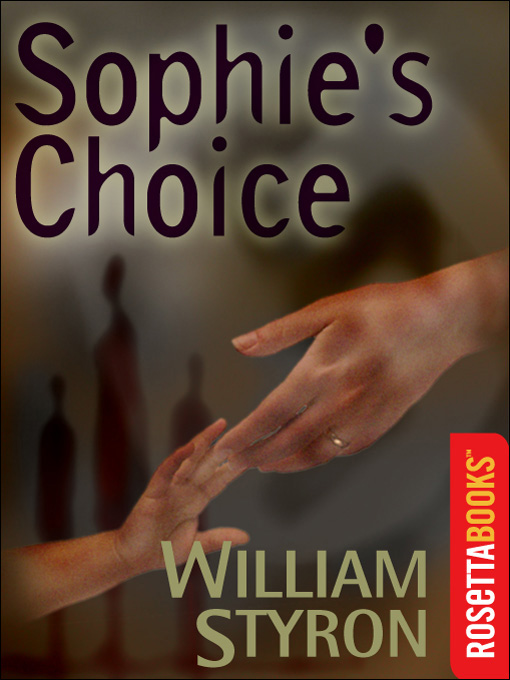
William Styron, interview, Writers at Work, 1958 (Writer of Sophie's Choice)

Though some read for escapism, most literary work is not escapism... or perhaps it is. If I'm having a crap day and I read Macbeth or Tess of the d'Urberville, it makes me feel my life isn't so bad. The fact that my coffee maker is on the fritz isn't as bad as having to choose which of my children will have to die by gassing in a concentration camp.

So we need to take time out to thank those neurotic out there that imagined the horrible life stories of characters both real or imagined. We may not like our life so much if everyone we read about pranced about their mansions with the love of their lives.

How does the quote touch you? Have you read Sophie's Choice or seen the movie? How did it affect you? Can you see why the writer said what he did?


Also, if you haven't seen the video posted on Elizabeth's site - Mystery Writing is Murder yet, go see it. It's a funny look at editors.


Saturday, 20 February 2010

Saturday's Writing Quotation Examination

Writing is a product of silence.  ~Carrie Latet

I liked this quotation when I read it because it could mean different things to different people.

First, it could mean that to get a good session of writing done, you need silence. You need to hear the words your characters are speaking to you. You need the silence to focus on the scene and where to place your characters.

Secondly, it could mean writing is a product of a lonely childhood. Perhaps you were raised an only child and/or your parents worked a lot and you had to keep yourself occupied. Those hours creating an entertaining world for yourself, has made you adept at creating wonderful worlds for others.

Or maybe it means you should not tell your story idea to anyone. Debating possible plot options could effectively stops production in its tracks. It may turns your project into an attempt to please everyone at once. Others suggest it distracts you from the delicate process of actually working on the project; you become the type of writer who is always talking about his/her book without ever actually writing it.

These are some ideas of what the quote might mean...WHAT DOES THIS QUOTE SAY TO YOU?

One source: here
Picture source: here


Next, I wanted to send a thank you to Kristen who gave me this award. She's a new blogger with a fantastic looking blog. Go check it out.

I've already received and handed this award out...but thank you so much for the mention.

Seven things about me:
I'm Canadian and I don't:
1) like the cold or play outdoor winter sports
2) speak French
3) like eating wild game
4) live in an igloo
5) have a dog sled or huskys
6) have a president
7) say 'eh'

Saturday, 13 February 2010

Saturday's Writng Quotation Examination

The two most engaging powers of an author are to make new things familiar and familiar things new.  ~Samuel Johnson

 Saturdays are slow days in the blogging community. Perhaps it stems from the fact that most writers (myself excluded) have lives away from their computers. So, I've decided to save my writing posts for mid-week and make Saturdays a writing quote study.

How it works: I take a random writing quote and examine its meaning and search for wisdom within.

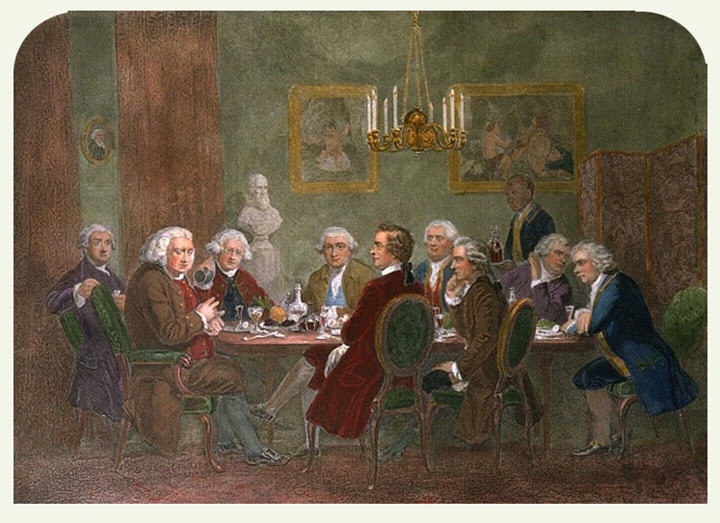
This is my first quote. Samuel Johnson lived in the 1700s and was best known for his essays, poetry and sermons. Johnson even influenced Jane Austen's writing style and philosophy.

What he says here rings true for me... writers whether they wrote long ago or today have a great deal of power. Their words shape the thinking and view points of the readers.

How?

For example, let's say we were against the slave trade a few hundred years back. We could write a book from the point of a slave or a slave owner and make the characters ones we relate to or feel sorry for. If we write enough books with subtle situations describing the follies of a certain course, we can shape the society that reads our work. Many, including Samuel Johnson, did such with their writings.

Many topics off-limit and banned to readers years ago have become a norm because literature has made it acceptable. Example, Harry Potter.

Now, how does a writer make familiar things new?

Through the creativity of the writer, we can make a walk through a park full of love, laughter, murder, mystery, suspense, or even a thought-provoking take on life.

We can take a simple balloon ride and change the lives of many...(Black Dogs by McEwan)

What is your take on this quotation?

Saturday, 23 January 2010

Quotation Examinations - Are you like your main character?

Every author in some way portrays himself in his works, even if it be against his will.  ~Goethe


This quotation made me think, how am I like my character?


  1. I like neatness
  2. I love cracking codes (BTW, if you have a cool code you think I can crack, send me one.  You could always try and crack mine: *233231>23233232*3221*31<*33*31313223*11243131>)
  3. I'm smart (not necessarily humble though) 
  4. I drink a lot of coffee
  5. I don't drink a lot of alcohol (actually none, but we won't go into reasons why)
  6. I like my privacy... that being said, I've said too much already. Good-bye.

Tuesday, 13 October 2009

The best style is the style you don't notice.  ~Somerset Maugham

Tuesday, 4 August 2009

Better to write for yourself and have no public,
than to write for the public and have no self.

Cyril Connolly (1903 - 1974)

Thursday, 16 July 2009


I do not want people to be agreeable, as it saves me the trouble of liking them.

Jane Austen

Thursday, 9 July 2009

What about the hero of The House on the Strand? What did it mean when he dropped the telephone at the end of the book? I don't really know, but I rather think he was going to be paralysed for life. Don't you?
Daphne du Maurier

Monday, 14 January 2008

Writing is putting words on the paper until the
voices
in your head shut up.


Frank Fradella

Sunday, 25 November 2007

We forfeit three-fourths of ourselves in order to be like other people.
- Arthur Schopenhauer

Friday, 23 November 2007

I try to leave out the parts that people skip. ~Elmore Leonard