Saturday, 14 November 2009

It's that time again!

Well, it's time again to submit. Every year, I enter one of my mystery books in the Dagger Awards, a prestigious award for best mystery or crime fiction. It's a British award.

I haven't won yet but, I have to try.
What to write: (This advice is actually for any writing fiction.)


The Chapter(s)

Leave ’em hanging

We used to describe the 3000 word opening as the ‘first chapter’, but a lot of authors write chapters which are substantially shorter than 3000 words. To clarify: you should send in as much as you can within the word limit, but send chapters not chunks. The point of a chapter is that it has a clear structure, and builds to a dramatic conclusion of some sort. The same should be true of the entry as a whole, however many chapters it is. Don’t let it dribble out on the 3000th word: build to a cliffhanger or climax which leaves the reader desperate for more.

Cut to the chase

If you are writing for a competition like the Debut Dagger, try to have a significant scene. That doesn't mean you have to have a body on page one, but if you have ten or twelve pages to play with, make sure you use them. One of the beauties of fiction is that you can skip over all the boring bits of life: taking the long way round slows things down for your reader, and doesn't make best use of the limited space you have to impress the judges.

Hoard your characters

Characters are the key to the story: if the reader doesn’t care who people are, he won't care what they're doing. Try to give each character a solid introduction, and don't overload the reader with too many characters at once. As the author, you've probably spent months or even years with your characters and you know exactly who they all are, but the reader doesn't have that advantage. This is particularly true for the Debut Dagger, when the judges are having to meet whole new casts of characters at bewildering speed.

Build Tension

Many of the entries that work best grip the reader with a genuine sense of tension. This isn't just about overt danger or violence: it's amazing how dull a gruesome murder can be made to seem if it's written badly. Effective tension comes from a sense of menace and anticipation, built up with mood, little clues and tell-tale signs.

Beware the malapropism.

Typos are bad and you should strive to eliminate them, but if a few typos could ruin a novel then most bookshops would have empty shelves. Far more dangerous is using a homonym or near-homonym to unintentionally hilarious effect. Two examples we’ve come across (in strong entries) were the man being chased through the supermarket who hid in the 'isle of crisps', and the 'burlesque policeman' who walked into the room. Both of these made the readers laugh out loud, breaking the tension of otherwise good scenes.

Avoid cliché

There are any number of clichés associated with crime fiction – grizzled cops, hard-boiled PI’s, sexy dames and psychopathic villains, to name but a few. Part of the fun of working in the genre is being able to play with these stereotypes, but you’ve got to do something new with them. One year an editor made the plaintive - or pointed - observation: 'Why are all innocent female victims invariably blond and beautiful?'
The warning against clichés applies equally (or even more) to language. Unless you're writing for a tabloid, avoid really common terms: 'emotional rollercoaster'; 'heart-stopping surprise'; or, a pet hate, 'feisty'.

The Wow Factor

It seems fitting to leave the last word on this subject to another one of the judges. For any chapter to count in a competition like this, the reader must put the material down thinking ‘Wow!’; and then, ‘I need to read more’. It's not enough for the reader to want to read more, they must put the excerpt down feeling they need to know what happens next.
It's only 25 British Pounds.
If you want more information about how to enter both online or by mail, check this link.

Friday, 13 November 2009

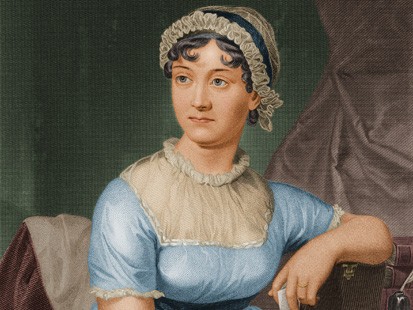
For Fans of Jane Austen

I noticed this article from BBC News. Well, I love Jane Austen so... Sources: here and here


Rare Austen letters cause excitement

By Claire Prentice
BBC News, New York
 
A major Jane Austen exhibition, which has opened in New York, is creating a huge stir among fans and cultural commentators.
More than 100 items, including rare manuscripts and letters written by the British author to her family, have gone on display at the Morgan Library and Museum in Manhattan.
"You can really get up close to the letters - get your nose in," says Morgan curator Declan Kiely.
"You feel you are getting to know Austen even though she is unknowable in some respects."
The letters - which is the largest collection in the world - are full of the author's famous stinging wit and her spirited sense of humour.
In one, written to her niece for her eighth birthday, Austen wrote each word backwards, creating a puzzle for the young recipient.
Only a small number of the author's personal letters have survived, and opportunities to see them in public are rare.
"There have been so many Jane Austen adaptations over the last 20 or 30 years. It seemed like a timely moment to show this collection," says Mr Kiely.

'Thoroughly modern'
Nearly two centuries after her death, Austen is more popular than ever, thanks in part to numerous book, TV and film adaptations of her work.
These have starred a host of Hollywood actors including Colin Firth, Anne Hathaway and Kate Winslet.
In October, BBC One screened a new version of Emma, starring Jonny Lee Miller and Romola Garai.
A highlight of the exhibition is the only surviving and complete handwritten manuscript of one of Austen's novels, Lady Susan.
Composed in 1794-95, the story is a dark, satirical novel about a widow, determined to find a husband for herself and her shy daughter at any cost.
"We are very excited about Lady Susan. It hasn't been shown in public for many years," said Marsha Huff, President of the Jane Austen Society of North America.
"Austen's themes are universal, her characters are believable and her heroines are thoroughly modern.


“ There's no doubt people will still be reading her 200 years from now ”
Marsha Huff, President of the Jane Austen Society of North America


An unfinished manuscript of The Watsons is annotated with detailed revisions.
It is the only surviving Austen manuscript which shows her work in progress.

Poignant letter
Other exhibits include a note in which Austen lists the amount of money she has made on each of her novels.
In another, she has written down her expenses, which included clothes, stamps and meat from the butcher.
But, perhaps the most poignant is a letter dated 20 July 1817, written by Cassandra to Fanny Knight - Austen's beloved niece - reporting the author's death.
"I have lost a treasure, such a sister, such a friend as never can have been surpassed," it read.
Some of the letters on display have pieces cut out of them, most likely to be passages relating to health and other personal matters.
The Morgan's curators speculate that they might also have included criticisms of people the author knew.
"Jane Austen was like a guided missile of social satire. She was very frank which is why so many of her letters were destroyed or excised [by Austen's family]," explains Mr Kiely.
"She writes in one about people's fat necks and about people she's seen at parties.
"In one, she writes about women she's seen out in Bath wearing these elaborate hats topped with grapes and strawberries," he added.
Written at a time when paper and postage were expensive, the letters are also remarkable for their economy, with Austen cramming as many words as she could into each page.
In some letters, she used cross-hatching, whereby people at the time wrote both horizontally and vertically on the same side of one page to save money on paper and postage.
The organisers of the exhibition have also commissioned a documentary film about Austen's continuing influence, which features interviews with Fran Lebowitz, Colm Toibin and Cornel West.
A Woman's Wit: Jane Austen's Life and Legacy opens at The Morgan Library and Museum in New York on 6 November and runs until 14 March.

Tuesday, 10 November 2009

Writer's... uh, block. That's the word.

I hear writers complain about this malady all the time. They ask me if I suffer from it. No, not really. If I'm not writing, it's not because I'm stuck for ideas or words. It just boils down to the fact... I'm lazy.

There is a big debate as to whether this is a real condition or not. Many writers say no. "Aspiring writers chalk up their difficulties to writer’s block as if that’s an appropriate excuse for not doing their work. But it’s not. They let this thing called writer’s block prevent them from their goals and aspirations of publication for days, weeks, months, or even years. But they don’t have to." (Source)

I agree.

Maybe one of the reasons you can't write is because you have a really bad idea to write about. The cure? Think of something better. Step away from your computer for awhile and get a change of scenery or better yet, mindset. Don't use "Writer's Block" as an excuse.

And above all, DON'T stop writing. Even if it's this: The cow jumped over the moon. Because it may turn out to be the best novel you've ever written. Hell, I may start my next book with that line.

Start by typing a word. Black. Add another. Black cat. Then another. Black cat blues. Make it your goal to write 100 words a day until you get up and running. And the words can be just plain gibberish for all you care. Gibberish for a few days and until you get your head in gear is better than being stuck in the wrong mindset.

Here are some quotes from other writers:
  • "People have writer's block not because they can't write, but because they despair of writing eloquently."
    (Anna Quindlen)
  • "If I waited for perfection, I would never write a word."
    (Margaret Atwood)
  • "Don't get it right, just get it written."
    (James Thurber)
  • "What I try to do is write. I may write for two weeks ‘the cat sat on the mat, that is that, not a rat.’ And it might be just the most boring and awful stuff. But I try. When I’m writing, I write. And then it’s as if the muse is convinced that I’m serious and says, 'Okay. Okay. I’ll come.'"
    (Maya Angelou)
  • "I set myself 600 words a day as a minimum output, regardless of the weather, my state of mind or if I'm sick or well."
    (Arthur Hailey)
  • "All through my career I've written 1,000 words a day--even if I've got a hangover. You've got to discipline yourself if you're professional. There's no other way."
    (J.G. Ballard)
  • "I write 2,000 words a day when I write. It sometimes takes three hours, it sometimes takes five."
    (Nicholas Sparks)
  • "I have to get into a sort of zone. It has something to do with an inability to concentrate, which is the absolute bottom line of writing."
    (Stephen Fry)
  • "My block was due to two overlapping factors: laziness and lack of discipline. If you really want to write, then shut yourself in a room, close the door, and WRITE. If you don't want to write, do something else. It's as simple as that."
    (Mary Garden)

Sunday, 8 November 2009

Why Write...now?

One thing I'm proud about is that I picked up writing when I was young. I mean, serious writing. I know writers that have decided to finally write that book once they retired. Everyone of them regret waiting so long. Sure, there are reasons that people wait, they have children, family, they have to work full time to support themselves and their families. All noble causes.

But, does writing a book take that much time?

How long have I been writing? Let's see, this will take some math. I'm thirty-three now, I started three years ago. Wait, no math at all. God, I'm really tired.

Okay, three years. Now, in that time, I have written three full books, one half, three short stories, and a few poems. Before that, nada. I have one published book and one published short story that I am (and my family) extremely proud of. And, I am working on getting my next book published. I can use that self-esteem the rest of my life.

Now, you may be wondering, how much of my precious life has that taken up?

Surprisingly little.

Once you have a great novel idea, it only takes about a month of writing everyday (10 minutes/100 words) to get into the habit of writing it. That's like a daily blog. Once you get into the HABIT of writing, build up the number of WORDS you write a day. 100 --> 300 --> 500 --> 1000... that should take a month or two. For me, it takes about an hour or two to write 1000 words. Tops. And for most novels, I only write from 1000-2000 words a day because I have a family to take care of -- that's two hours a day (and I do it at night when my kids are sleeping.)

For an average 90,000 word novel, that three months. If you're like my family, you probably spend that much time a month on Facebook's Farm Town.

So, to sum up, START WRITING! Don't wait. You may regret the 90 hours you played FarmTown this year, but you won't regret the 90 hours it took you to write a book.

Wednesday, 4 November 2009

An idea on advertising...

I rode the bus today. Something I like to do every once and awhile. It's amazing what kind of personalities you see and can use in your writing.

Anyway, along the bus stops, there are free daily newspapers that the poor riders can pickup and mindlessly read while pretending they are not worried the person next to them will rob them. That being said, I picked up that daily paper and read it. It's not a large newspaper but it is widely circulated. People who ride public transport -- read. And almost all, read that daily paper.

That's when the idea hit me.

Recently, I read work by an author who wrote short short-stories about her car. She asked me what she should do with them.  I gave her a few ideas: contests, self-publishing, etc. Today, I thought, why not publish them in the paper? Now, they may not want to waste space publishing them in the space they use to write their articles ... but what about writing them in an advertising space.

I don't know what it costs to advertise in these papers but if you have a novel out already and you want to get your name out there to a greater number of people, advertise your book by way of an excerpt from your book or a short story or poem you wrote.

Anyways, these are just ideas.

ann

Tuesday, 3 November 2009

The Writer's Bubble

The last few days, I have been on "vacation." I use quotes because I'm visiting family and really, that's never a vacation. Hellish really. You are hit, once again, with why you live two thousand miles away.

So, I find myself wanting to enter my writer's bubble. It's a writer's escape, somewhat like the reader's escape in the form of a book but in my case, I'm writing it.

I can't speak for all writers but I know many who feel writing is all consuming. For example, if you're writing and your son or daughter comes in the room and you stare at them for a minute wondering which character they are and why they're appearing in the this chapter... you're in your bubble. If however, after a half hour, you still don't recognize your kin, seek psychiatric help. I have to admit, sometimes I scare myself.

I do take consolation in the fact that if ever I am locked in some sort of prison (not that I'm planning it) I think my mind would take over and the bubble would come to my rescue. I would eventually be officially nuts. But, I think my characters would keep me company.

Now I know many of you reading this will be wondering what the hell I'm on about. And, honestly, I think it's difficult to explain if you have never lived it. How the story you're writing is so exciting, the characters so real, the dialog more interesting than any you could possibly have in real life, you start living it... if only in your mind.

The writer's bubble. Ahhhhhhhhhhh.... please don't pop mine.

ann