Wednesday, 13 January 2010

The Five A.M. Sunset


Today, I read blog about keeping notes and I think there's another great reason for notebooks while you write. Actually, the reasons are endless. Today, however, let's talk about one - timelines.

I write mysteries, but no matter what genre you write, you need to make sure you have the scene firmly set in your mind.

  • Is it pouring rain but your character's in a t-shirt and shorts?
  •  
  • Is it midnight when you arrive at the murder scene but you describe the sun shining through the window onto the body?
  •  
  • Is it summer and the kids are trick-or-treating?

How can you keep it all straight in you mind, especially if you don't write everyday or your editing after placing the manuscript away for three months?
Well, every writer has their own system but I use the notebook. I love going to the stationary store and picking up a really elegant notebook with which to keep notes.

What sorts of things does one write in their notes?
Here's an example I found on another site: 


Some others use Excel or Word programs, some spread paper on their offices walls, some use notecards.

What is your system?

Sources for photos: here and here

Tuesday, 12 January 2010

Theme and Strategy: Part 4 - Pattern in Action


Once you decide what your plot will be in your story, you can translate the concept into action, into events. Who does what, when. 

A common mistake beginning writers make is to think of action as nothing but a series of successive events like beads on a string. First this happens, then that, then that, and so forth. But action is responsible for building tension, for gaining momentum in a story. You have to learn to pace actions so that events build dramatically.

How to create pattern in action:

1) After you write a scene, ask yourself in what way (or ways) a scene contributed to developing or answering  the plot questions you've raised.
2) When stuck, ask yourself the plot questions and how to direct your efforts to answer them.
3) Don't overwhelm your readers with plot questions, 2-3 are enough.
4) Don't delay giving answers. Some answers give early. For example in a mystery you can answer 'Whose are the bones?' and later answer 'How did the bones get into the cellar?' Pace the answers from beginning to end.
5) Make sure the action is consistent with the dramatic phases of the pattern.

Action is the means; plot is it's end.

Source: A book from Ronald Tobias

Monday, 11 January 2010

Starting your own literary magazine... it's hard work.


For fun and because I'm crazy, I thought I would start a literary magazine. Why? I don't know if I can quite put my finger on that button yet, but it was definitely something a blogger said yesterday.

Oh yeah, I remember now, it's a blog by Martin Edwards entitled, The Economy and Crime Fiction,
the blog post had nothing to do with starting a magazine but he mentioned a time when people went to the store and picked up a copy of Ellery Queen magazine, sat by their fireplace, and read. He asked, "Does this mean that there will be a renewed appetite for lighter, escapist fiction?" And that got me thinking. Why not start a lighter fiction magazine?

So, I did.

Two days later, here it is: The Words Berth Literary Magazine. Now, I still have to work out the kinks and still need to add more content (I already have 5 submission requests!), but, I think it will be a great way to showcase some of the really talent poets and writers out there. Plus, it's free. Come, become a follower. Check out what fellow bloggers and budding writers are writing. Leave comments -- I would prefer encouraging comments only for the writers-- and join our forum!

What to submit? Go to the submission page.


Why did I use blogger? Um, because one, it's free. Two, I know how to use it. Three, I love Google.

Now, I better get back to the magazine and edit the unedited short story I placed on there as an example.

Sunday, 10 January 2010

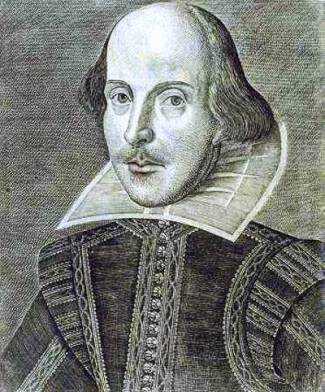
Shakespeare's Sonnet Sunday: Sonnet 1


From fairest creatures we desire increase,
That thereby beauty's rose might never die,

But as the riper should by time decease,

His tender heir might bear his memory:

But thou contracted to thine own bright eyes,

Feed'st thy light's flame with self-substantial fuel,
Making a famine where abundance lies,
Thy self thy foe, to thy sweet self too cruel:
Thou that art now the world's fresh ornament,
And only herald to the gaudy spring,
Within thine own bud buriest thy content,
And, tender churl, mak'st waste in niggarding:
Pity the world, or else this glutton be,
To eat the world's due, by the grave and thee.


Now the modern version:

We want beautiful people to have children.
So that, in good time, all Brits will have good teeth.
And when the old die...
The good looking, with good teeth, will still be around for us who have gone through corrective dental surgery.
But you, you like what you see in the mirror.
And feel content to just stand there and not procreate. (What's the matter with you!?)
Oh, listen to the women weeping!
The ugly will rise and take over the earth!(And all our movies will be Avatars)
Because you, you vain man, though you are the newest sweeeet thing,
And can lift us from downcast spirits,
You keep your beauty to yourself.
What a bloody waste! (Niggarding means stingy, in case you felt offended.)
Take pity on us uglies or continue to be a selfish glutton,
Give us our beautiful children or take your beauty to the grave.


To sum up: If your good-looking, have lots of babies.

What was the bard thinking when he wrote this?
'And I must say, I am one fine looking chap. Now, why does not my wife want to make lots of babies with me?'

When did he write this?
Pretty early in the day, I'd imagine. Here's the scene:
'Bill, it's early, I'm sleeping. Stop it, don't touch me there. Look, this is off limits until you make us some bloody money, now shoo, I'm sleeping.' (Liberties taken.)

Source: Analysis of Shakespeare

Saturday, 9 January 2010

Theme and Strategy: Part 3 - Pattern in Structure


It is impossible to create the totally original plot with totally original characters.

That aside, in how we write, we write with a pattern in structure. For example, we all start at the beginning, we have a middle and we have an end.

SO where should a writer start?

1) Establish characters - Introduce them one at a time or in small groups. Now, this doesn't mean we start the story with pages of backstory. If you do that, you will be struck by lightning. Well, actually you won't. But, it's a really big pet peeve of mine and I'm sure 99% of your readers. The best way to introduce your characters is through your other characters. Don't force your characters on the reader, give us time to get to know them, but don't take too long either.

2) Establish place - This doesn't mean start with the weather and the city. But, place them somewhere and give brief glimpses into where that is so your reader can get a bearing.

3) Start the action - Set up the dramatic presence to the story. Raise the central question. If you're writing a mystery maybe start with a murder. Then the reader asks: Who did it? If it's literary fiction, give your readers a puzzle to ponder. In Citizen Kane it's "What's Rosebud?"

4) Start the story late - Stories should begin the moment they get off the ground. It gets the reader involved immediately.

5) Establish the tone - is it a comedy or a tragedy? Give us a feel for the style, is it witty or somber?


Friday, 8 January 2010

Most Memorable Short Story: The Nine Mile Walk


We often remember our favorite novel -- for some it's Pride & Prejudice, for some it's Harry Potter, for some it's Gone with the Wind (right, Corra?) -- but do we often think about our favorite short story?

Today while I was traveling, I thought about it (while staring dreamily at my newly purchased novel Mrs. Dalloway - with the gorgeous cover). I knew immediately what it was. And it wasn't something I wrote but it was something I based one of my short stories on.

It's a story called:

The Nine Mile Walk by Harry Kemelman.

It's an old story, written in the sixties, but my father used to read that story to us when we had visitors. (It's his favorite story too.)

Why is the book so memorable?

For a mystery lover like myself, it's the perfect 'armchair deduction' story; a whole skein of deductive reasoning exposing a crime based on a simple overheard phrase.

When Professor Nicky Welt extols the virtues of Logic, his friend (and the narrator) challenges him to explain the meaning of the arbitrarily overheard sentence: “A nine mile walk is no joke, especially in the rain.” From this sentence and very little else, Welt is able to not only deduce facts about who first uttered it, but is able to solve a murder. Although it’s out of print and somewhat scarce, The Nine Mile Walk: The Nicky Welt Stories is a wonderful collection, and copies can be found. (My dad owns one...the book is falling apart but he loves it.)


In recalling that early story, Kemelman wrote (in the introduction to the collection): “I was approached by several publishers who were interested in seeing a full-length manuscript about Nicky Welt. Naturally I was flattered, but at the same time I felt I had to refuse. I felt that the classic tale of detection was essentially a short story.”

What story touched you the way this one did for me?

Source: criminalbrief.com