Thursday, 4 March 2010

Writing Dialog: Bring it on!

In my opinion, when writing fiction, there should always be conflict in dialog.

'Nice day, isn't it?'
'Oh, it sure is. The sun is a beautiful shade of yellow. Copperish, don't you think?'
'Copper would be a wonderful way to describe it. Do you know what this is?'
'No, what is it?'
It's conversation that's boring. There's no conflict, there's no point, the story isn't going anywhere.. 

How can we make our dialog sizzle?

1) Be aggressive, threaten - ('Go ahead, make my day.')
2) Be passively aggressive -submissive characters wreak havoc on dominant ones. (“No, dearest, I don’t mind picking up your socks and putting them in the wash for you,” Susan said, as she threw them in with a red shirt.)

3) Provocation - one character can taunt or dare another. ("Ron," he said. "You have to confront her now. If you don't she won't stop calling you.")

4) Use undercurrents - The words and actions or expressions do not match. (He slammed his glass down on the table. "I would love to go to Bermuda with you.")

5) Be ambiguous - Is there conflict? Isn't there? 

6) Subliminal conflict - While the two characters are engaged in innocent banter, disaster is waiting for them around the corner.

7) Word choices - there are fighting words. ("Want me to kick your butt?")

8) Sentence & Paragraph length - Shorter, abrupt sentences and paragraphs are more confrontational.

9) Repetition - Repeating key phrases add emphasis. "When I talk, you listen and you listen good."

10) Use imperatives. And in case you don't know what that means it's commands. Sit. Lie. Die. Buy. Pie. No, that last one's not really one. But I could sure use some...

And don't think that because you write sappy love stories or children's fiction that you can't have dialog with conflict... take a novel entitled The Three Billy-Goats Gruff:
"Who's that tripping over my bridge?" roared the troll .
"Oh, it is only I, the tiniest Billy Goat Gruff , and I'm going up to the hillside to make myself fat," said the billy goat, with such a small voice.
"Now, I'm coming to gobble you up," said the troll.
"Oh, no! pray don't take me. I'm too little, that I am," said the billy goat. "Wait a bit till the second Billy Goat Gruff comes. He's much bigger."
"Well, be off with you," said the troll.

Pic source: here
Source: Brainstormer

Wednesday, 3 March 2010

Let the reader have an imagination

One of the usual mistakes beginners make is to explain too much.

How much is too much? You need to learn what is necessary for the story. These come with experience, but a beginner can start developing them by recognizing the problem.

The problem is love. You love your story. You love your characters. You love the world you've invented. You want your readers to see them, appreciate them, and understand them just as you do yourself. And since you don't want your readers to start with the wrong impression, you pile up descriptive scenes as soon as the story opens. Or you drop in a big lump of description right after that 'grabber' first line you know you're supposed to have, in order to steer the reader into your vision.

For instance:
    The car plunged through the barrier and over the cliff.
    Nadine prayed the airbag would save her, her generous mouth opened in a scream, her periwinkle blue eyes fixed in horror on the ocean below, her auburn hair, thick and luxuriant, streaming behind her, her elegant, long legs braced for the crash.
    Nadine had always been strikingly beautiful, even as a child. Her hair, less golden then, was always held back by a blue ribbon. In summer a few delicious freckles dusted her nose. Wide shoulders had led, in adolescence, to a bosom of graceful proportions. Her hands were elegant and beauticians often commented on her healthy nails, nails that were now digging into the car's upholstery....
and so on.

How can we avoid this mistake? Rewrite your work, excluding every scrap of description. Now how does the story read? If a detail was not necessary, its absence will not be noticed. You'll be surprised how little description you actually need.

Use action to describe.
From Careless in Red by Elizabeth George

Use dialog to describe. (In the example below, we know their are trees, a fence, markers and in clear view of a house.)
From One Last Breath by Stephen Booth


A basic rule of writing: don't add anything that does not propel the story. Two people rushing through the night to the hospital is action, two people arguing in the car as they rush to the hospital is character development within action. The fact that one of them is six foot tall with blue eyes is neither action nor illumination.

Advice for beginners: cut. And keep cutting until you think you have reduced your story to a skeleton. The skeleton is your story. The rest is blubber.

Source: here 


Check out Corra's blog about characters today!

Tuesday, 2 March 2010

Writing Transitions and Tie-backs: Part III

If a writer can make connections in their story either subtle or obvious, you engage the reader in your fiction and they will love your book.

So, how can we do that?

1) With seemingly trivial details -Hitchcock did this a lot. He would focus in on an object or movement and the viewer would wonder what the significance was for the action...later in the movie, the object would announce itself again and all would be known. This you could do in revision.
For example, in one of my mystery novels, the code I use begins with a series of numbers that the MC battles throughout the book to understand. Well at the end, she realizes what the numbers signify and it ties pieces together...

2) With seemingly small words and ideas - a) repeat a distinctive thought or phrase of dialog in the story but do it in a way that gives it a varied meaning each time he or she says it. b) put a bit of the ending in the beginning. For example, if your murderer is mentioned at the beginning and at the end the killer feels he's accomplished something by his killing spree, drop hints to his accomplishment in the beginning.

Chapter one - the murder thinks, I will become famous, they will talk about me for years to come...
Last chapter - the murder shouts, "They will talk of me and my brilliance for years to come!"(as he laughs an evil laugh...mhahaha)

or

Chapter one - the MC purchases a handbag and then chastises herself for spending to much money, poor people would murder for the money I spent on this bag.
Last chapter - after she solves a case where an innocent man died for pocket change, she sees the bag, dumps out the contents, returns it and gives the money to a homeless man on the street.

3) With consistency of character - make sure that the character always stays true to themselves. True, characters change but make sure they are truly motivated not because you want them to change to fit a scene. Review each character's goals.

4) With conflicting POV - when you tie-back characters who are in conflict to an event involving both, show how they differ in the recollection of the event. They should remain in conflict even when they remember the scene later on.

5) With the element of surprise - if you can, try and surprise your readers...not with crazy, unbelievable, or unplausable actions but use unpredictable words or sentences or endings to a scene. Surprise your character, surprise yourself.


I made a mistake yesterday... I mentioned I got an award from Laura at Though Laura's Eyes but I forgot to add the link so you could check out her site... so, I will mention it again today. Go visit her site!

I am supposed to give this award to 12 bloggers, but 5 will have to do because I'm on the verge of colapse. I also have to display my award (done yesterday) and then write 10 things about me (see right column or below).

Sunshine award goes to:
1) Leya at Wandeca Reads
2) Charmaine Clancy at Wagging Tales
3) Mason at Thoughts in Progress
4) Jim at The Truth about Lies
5) Marce at Tea Time With Marce

Also, I've received the Kreativ Blogger Award from Rayna at Coffee Rings Everywhere... I haven't received this one before...so I will add it to my collection.

You can learn more about me on the right column and on this blog.  I still haven't decided who to give the awards to, so that will come later.


Also, all you mystery writers check out Elizabeth's blog on making your mystery novel scary or suspenseful. She gives wonderful advice.

I've started another blog (I know... I do it torture myself.) ...it's something I plan to work on with my son. It's bUcKet list...

And for all who don't know what CARMEX is, it's lip balm.


Monday, 1 March 2010

Wonderful example of Marketing: Thaw by Fiona Robyn

Probably as you flip through your daily blog roll, you will see a lot of Thaw. That's because many signed up to post chapter one of Fiona Robyn's book on March 1st. I was one of them. I wanted to see if it would work because in the future, it's something I may consider to market my book. And wow, does it work! Imagine all the people who will look at this chapter today.

These hands are ninety-three years old. They belong to Charlotte Marie Bradley Miller. She was so frail that her grand-daughter had to carry her onto the set to take this photo. It's a close-up. Her emaciated arms emerge from the top corners of the photo and the background is black, maybe velvet, as if we're being protected from seeing the strings. One wrist rests on the other, and her fingers hang loose, close together, a pair of folded wings. And you can see her insides.

The bones of her knuckles bulge out of the skin, which sags like plastic that has melted in the sun and is dripping off her, wrinkling and folding. Her veins look as though they're stuck to the outside of her hands. They're a colour that's difficult to describe: blue, but also silver, green; her blood runs through them, close to the surface. The book says she died shortly after they took this picture. Did she even get to see it? Maybe it was the last beautiful thing she left in the world.

I'm trying to decide whether or not I want to carry on living. I'm giving myself three months of this journal to decide. You might think that sounds melodramatic, but I don't think I'm alone in wondering whether it's all worth it. I've seen the look in people's eyes. Stiff suits travelling to work, morning after morning, on the cramped and humid tube. Tarted-up girls and gangs of boys reeking of aftershave, reeling on the pavements on a Friday night, trying to mop up the dreariness of their week with one desperate, fake-happy night. I've heard the weary grief in my dad's voice.

So where do I start with all this? What do you want to know about me? I'm Ruth White, thirty-two years old, going on a hundred. I live alone with no boyfriend and no cat in a tiny flat in central London. In fact, I had a non-relationship with a man at work, Dan, for seven years. I'm sitting in my bedroom-cum-living room right now, looking up every so often at the thin rain slanting across a flat grey sky. I work in a city hospital lab as a microbiologist. My dad is an accountant and lives with his sensible second wife Julie, in a sensible second home. Mother finished dying when I was fourteen, three years after her first diagnosis. What else? What else is there?

Charlotte Marie Bradley Miller. I looked at her hands for twelve minutes. It was odd describing what I was seeing in words. Usually the picture just sits inside my head and I swish it around like tasting wine. I have huge books all over my flat - books you have to take in both hands to lift. I've had the photo habit for years. Mother bought me my first book, black and white landscapes by Ansel Adams. When she got really ill, I used to take it to bed with me and look at it for hours, concentrating on the huge trees, the still water, the never-ending skies. I suppose it helped me think about something other than what was happening. I learned to focus on one photo at a time rather than flicking from scene to scene in search of something to hold me. If I concentrate, then everything stands still. Although I use them to escape the world, I also think they bring me closer to it. I've still got that book. When I take it out, I handle the pages as though they might flake into dust.

Mother used to write a journal. When I was small, I sat by her bed in the early mornings on a hard chair and looked at her face as her pen spat out sentences in short bursts. I imagined what she might have been writing about - princesses dressed in star-patterned silk, talking horses, adventures with pirates. More likely she was writing about what she was going to cook for dinner and how irritating Dad's snoring was.

I've always wanted to write my own journal, and this is my chance. Maybe my last chance. The idea is that every night for three months, I'll take one of these heavy sheets of pure white paper, rough under my fingertips, and fill it up on both sides. If my suicide note is nearly a hundred pages long, then no-one can accuse me of not thinking it through. No-one can say, 'It makes no sense; she was a polite, cheerful girl, had everything to live for,' before adding that I did keep myself to myself. It'll all be here. I'm using a silver fountain pen with purple ink. A bit flamboyant for me, I know. I need these idiosyncratic rituals; they hold things in place. Like the way I make tea, squeezing the tea-bag three times, the exact amount of milk, seven stirs. My writing is small and neat; I'm striping the paper. I'm near the bottom of the page now. Only ninety-one more days to go before I'm allowed to make my decision. That's it for today. It's begun.
Continue reading here. Follow on Twitter. Join the Facebook page.


Also, Laura at Though Laura's Eyes has given me a sunshine award, thank you so much. I will decide who gets it tomorrow and write 10 things about me then.

Sunday, 28 February 2010

Shakespeare's Sonnet Sunday: Sonnet 8

Music to hear, why hear'st thou music sadly?
Sweets with sweets war not, joy delights in joy:
Why lov'st thou that which thou receiv'st not gladly,
Or else receiv'st with pleasure thine annoy?
If the true concord of well-tuned sounds,
By unions married, do offend thine ear,
They do but sweetly chide thee, who confounds
In singleness the parts that thou shouldst bear.
Mark how one string, sweet husband to another,
Strikes each in each by mutual ordering;
Resembling sire and child and happy mother,
Who, all in one, one pleasing note do sing:
Whose speechless song being many, seeming one,
Sings this to thee: 'Thou single wilt prove none.'


1. Why is it that, when there is music to listen to, you are saddened by it?
2. Happy music should result in happiness.
3. Why do you pretend to love what you don't really want?
4. And receive with pleasure what clearly annoys you?
5. If the uniting sounds
6. Played together in harmony offend you,
7. If they bother you when together
8. But played alone you can bear it
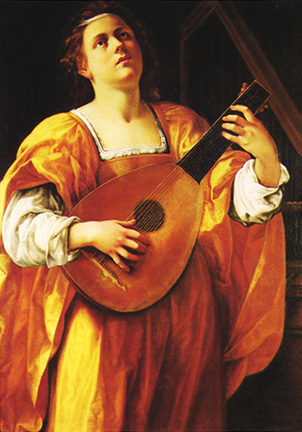
9. Look at how the strings, played together on the Lute (popular in Shakespeare's day)
10. The strings reverberate against each other in appropriate order.
11. Like a happy family with husband, child and mother
12. Who together make a happy sound.
13. Though made up of many components are actually one.
14. And one string played alone will actually be nothing.

This sonnet can have two meanings...

1) The one above or...

2) The idea of marriage with it's responsibilities to wife and bearing children may seem tiresome. Being single is like playing only one string of an instrument or one instrument of an orchestra... it's really nothing.


Sidenote: Going to the USA/Mexico border today... if you don't hear from me in a few days... well. Not to worry you, I'll probably be fine. It's an adventure... right?


Saturday, 27 February 2010

Saturday's Writing Quotation Examination

The good writing of any age has always been the product of someone's neurosis, 
and we'd have a mighty dull literature if all the writers that came along were a bunch of happy chuckleheads.  ~
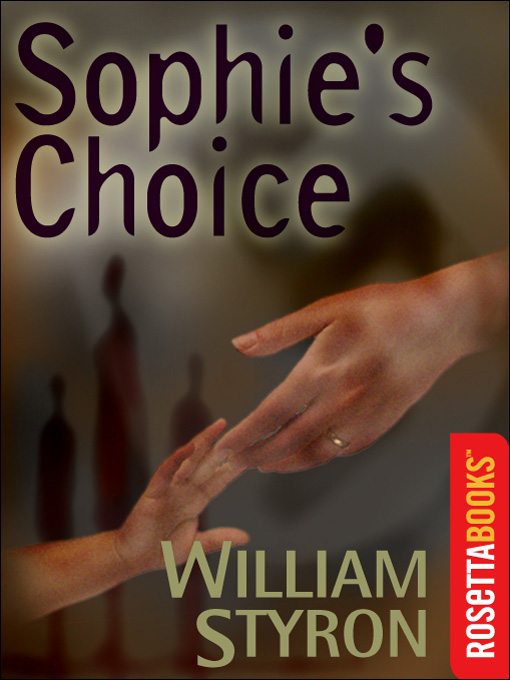
William Styron, interview, Writers at Work, 1958 (Writer of Sophie's Choice)

Though some read for escapism, most literary work is not escapism... or perhaps it is. If I'm having a crap day and I read Macbeth or Tess of the d'Urberville, it makes me feel my life isn't so bad. The fact that my coffee maker is on the fritz isn't as bad as having to choose which of my children will have to die by gassing in a concentration camp.

So we need to take time out to thank those neurotic out there that imagined the horrible life stories of characters both real or imagined. We may not like our life so much if everyone we read about pranced about their mansions with the love of their lives.

How does the quote touch you? Have you read Sophie's Choice or seen the movie? How did it affect you? Can you see why the writer said what he did?


Also, if you haven't seen the video posted on Elizabeth's site - Mystery Writing is Murder yet, go see it. It's a funny look at editors.